

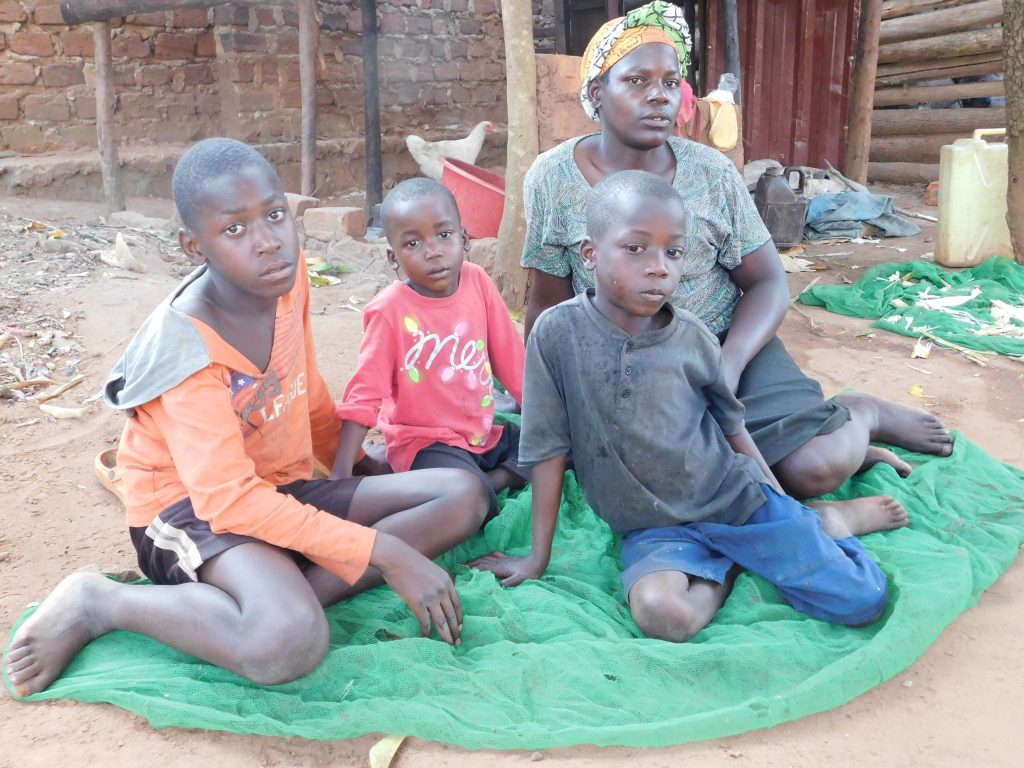
Women-headed households in Uganda have increased, according to new findings released by the Uganda Bureau of Statistics ahead of the official dissemination of the Uganda Harmonized Integrated Survey (UHIS) report.
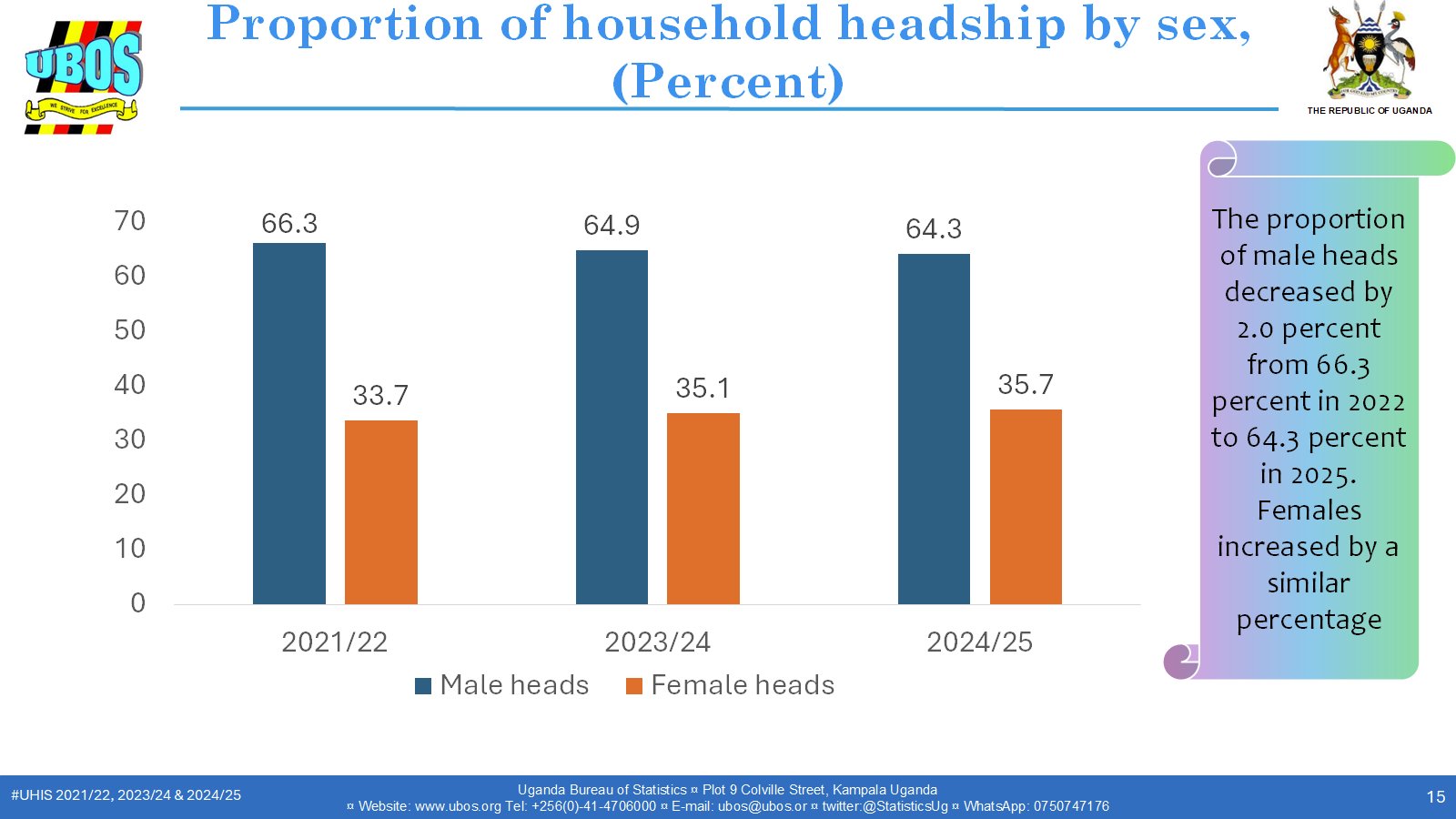
The report, which covers Wave I, II and III for the periods 2021/22, 2023/24 and 2024/25, reveals that male-headed households declined by two percentage points from 66.3 percent in 2022 to 64.3 percent in 2025.
Women-headed households registered a corresponding increase over the same period.
While releasing the report, Chris Mukiza said the survey provides nationally representative data on household living conditions, agricultural production, food security, income and service delivery to support evidence-based planning and national development.
The findings also indicate significant improvement in literacy levels across the country. The literacy rate among persons aged 10 years and above increased by 11.7 percentage points from 73.6 percent in 2022 to 85.3 percent in 2025.
However, literacy levels remain higher among males compared to females throughout the survey period.
In rural areas, literacy among persons aged 10 years and above increased from 67.8 percent in 2022 to 83.2 percent in 2025, representing a 15.4 percentage point rise.
Despite the improvement, urban areas continue to record higher literacy levels compared to rural communities.
The survey further shows a decline in subsistence work among persons aged 15 years and above. The proportion dropped from 30.4 percent in 2022 to 25.8 percent in 2025.
Employment in the Agriculture, Forestry and Fishing sector also declined nationally by 8.3 percentage points between 2021/22 and 2024/25.
Meanwhile, school attendance among children aged 6 to 12 years improved significantly, especially among girls.
The proportion of children in that age bracket attending school increased from 85.5 percent in 2022 to 94.6 percent in 2025, with more females attending school than males in recent years.
“Much as we are releasing this report today, it does not represent everything at once, but data available can still be further analysed by UBOS to provide more insights in different sectors,” Mukiza said.
UBOS says the findings will guide government agencies, development partners and policymakers in planning and implementing programmes aimed at improving livelihoods and social service delivery across the country.
